


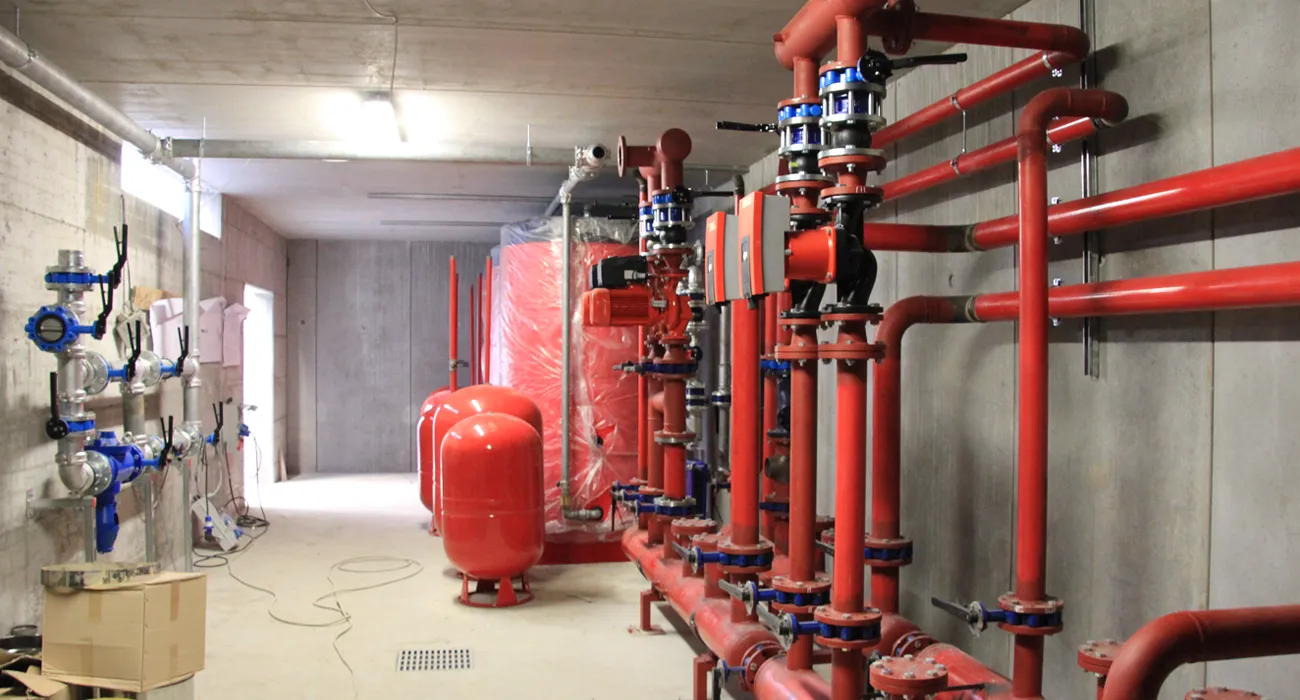
MEP Systems in Industrial Facilities
HVAC, Electrical & Fire Safety
Success in industrial facilities depends not only on a good structure, but on the correct operation of the building’s mechanical, electrical, and fire infrastructure. MEP systems (Mechanical, Electrical, Plumbing/Fire) directly determine the facility’s comfort, safety, energy performance, and operational continuity.
In a facility where HVAC capacity has been incorrectly selected, production stability can deteriorate. In a site where electrical infrastructure has not been properly planned, the risk of faults and stoppages increases. Fire safety is not just an installation – it is regulatory compliance and commissioning discipline.
1) The Right Start: Site Survey, Needs Analysis & Capacity Calculations
The most expensive mistake in MEP is the we-will-sort-it-on-site approach. Key questions to clarify at the outset:
- What is the facility’s current and target production capacity?
- What are the heat loads, fresh air requirements, process ventilation, and exhaust requirements?
- Do electrical loads and panel capacities cover growth scenarios?
- Are there special requirements for critical areas (server rooms, laboratories, clean rooms)?
- What should the fire risk class, escape scenario, and appropriate suppression approach be?
This analysis affects everything from HVAC capacity selection to cable cross-sections, panel placement to fire zone design.
2) HVAC: Beyond Comfort – Process Stability
In industrial facilities, HVAC is not only about comfort – in many production processes, temperature and humidity control directly affects quality. Good HVAC application works with correct capacity and correct zoning, sets fresh air to exhaust balance according to production scenarios, defines filtration and air quality according to objectives, and optimizes energy consumption while maintaining performance.
Incorrect air flow in production areas can cause dust migration, odour spread, and process instability. The project should therefore be approached not just as equipment selection but as an air distribution design.
3) Electrical Infrastructure: Continuity, Safety & Scalability
Electrical infrastructure is the backbone of an industrial facility. Correctly planned infrastructure reduces faults, provides maintenance ease, and prepares the ground for capacity increases. Key areas:
- Energy distribution, panel placement, cabling, and lighting
- Earthing and lightning protection approach
- Redundancy and protection scenarios for critical lines
- Low-current systems: data, CCTV, access control, automation infrastructure
4) Fire Safety: Regulations, Engineering & Verified Handover
Fire systems are one of the most critical areas in industrial facilities. Success here is achieved not just by installing equipment, but through correct engineering and testing and commissioning. Systems frequently addressed:
- Fire detection and alarm
- Emergency announcement and guidance
- Sprinkler, hydrant, and suppression infrastructure
- Fire zoning and scenarios
Without regulatory compliance, control records, and verification tests, handover cannot be considered complete.
5) Integration: MEP Systems Create Value When They Work Together
The real power of MEP is that systems work in harmony. HVAC automation must respond correctly to fire scenarios; electrical infrastructure must correctly feed critical equipment; low-current systems must be integrated with operational safety. This is why multi-disciplinary coordination meetings, clash analysis, phased execution, and quality audits play a critical role in MEP projects.
6) Testing, Commissioning & Documentation
The most frequently overlooked topic in MEP is the difference between finished and delivered operational. In the commissioning process: functional tests (HVAC operating scenarios, alarm scenarios), electrical tests, fire scenario tests, and user acceptance checks are completed. The as-built drawings, test reports, and maintenance documents then form the basis for sustainable operation.
7) Energy Efficiency: Correct Design = Low Operating Cost
Energy costs in industrial facilities are permanent. Correct capacity selection and control strategy in MEP generates significant savings over the long term:
- Zone-based control and automation
- Correct insulation and reduction of losses
- Efficient equipment selection and correct operating scenarios
- Maintenance ease and traceability
The aim is not simply low consumption – but the balance of performance, continuity, and efficiency.
Conclusion
MEP applications in industrial facilities are the intersection point of comfort, safety, and production continuity. When HVAC, electrical, and fire systems are managed with correct analysis, correct planning, strong coordination, and verified commissioning – the facility operates both safely and efficiently.
Are you planning MEP application or modernization for your facility? Let us plan together for correct capacity, correct engineering, and trouble-free handover - from survey through to commissioning.